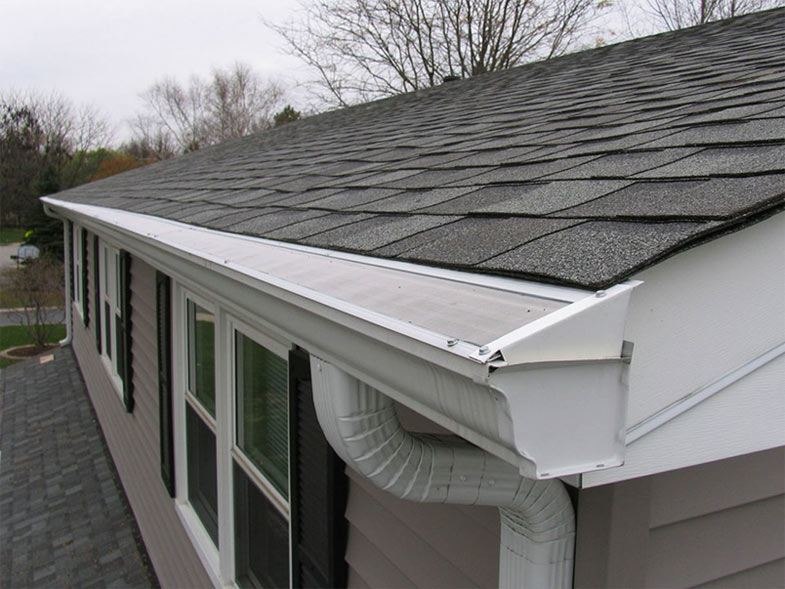
Gutter Protection for Philadelphia, PA Homes: Why It Matters
If you own a home in Philadelphia, PA, or anywhere across the wider Delaware Valley, gutter protection is one of the most cost-effective upgrades you can make to defend an older roof and foundation against water. The short answer to the question most homeowners ask—is gutter protection worth it in Philadelphia?—is yes: a properly fitted gutter guard keeps the “city of row houses” most common failure point—a leaf- and seed-clogged gutter—from turning a routine rainstorm into basement flooding, rotted fascia, or a sagging gutter pulling away from a century-old cornice.
Philadelphia sees roughly 44 inches of rain a year, spread across more than 120 precipitation days, and its street-tree canopy—maple, oak, London plane, ginkgo, and sweetgum—drops a heavy leaf load every autumn. That combination means unprotected gutters on Philadelphia homes clog fast and stay clogged. Gutter protection is the engineered solution: a screened or domed cover over the gutter that lets rainwater in while keeping leaves, twigs, pine needles, and maple “helicopters” out.
Why Philadelphia’s Climate and Housing Make Gutter Protection a Priority
Philadelphia sits about 60 miles inland from the Atlantic, so it does not face direct ocean storm surge the way the Jersey Shore does. What it does face is heavy downpours and the remnants of coastal systems—Hurricane Ida in 2021, Tropical Storm Isaias in 2020, and Tropical Storm Lee in 2011 all produced major flooding along the Delaware and Schuylkill rivers. When a nor’easter or a remnant tropical system dumps two or three inches of rain in an afternoon, an open gutter packed with leaves cannot move that water away from the house. The overflow runs down the exterior wall, saturates the soil at the foundation, and finds its way into older masonry basements—a recurring problem across Philadelphia, Delaware, and Montgomery counties. The National Weather Service advises homeowners to prepare for flooding before heavy rain arrives; keeping gutters and downspouts clear is the first line of defense.
Winter adds a second risk. Philadelphia averages about 22 inches of snow a year, and freeze-thaw cycles are common. When a gutter is already half full of debris, meltwater backs up, refreezes at the roof edge, and forms ice dams that can force water under shingles and behind gutters. For a slate roof or a flat modified-bitumen roof—two of the most common assemblies on older Philadelphia homes—that trapped moisture accelerates the very leaks and seams failures that already cost historic homeowners the most to repair.
Gutter Protection and Philadelphia’s Historic Row Homes
Philadelphia’s housing stock is unusually demanding on gutters. The city is defined by its brick row homes—from Society Hill and Queen Village to Fishtown, Northern Liberties, and the tight blocks of South Philly—many of them built between the late 1800s and the 1930s. A large share of these homes has flat or low-slope roofs finished with modified bitumen or rubber membrane, and the gutters feeding them are decades old. Older gutters are more likely to be rusted, sagging, or pulled slightly away from the fascia, which makes them both slower to drain and harder to clean safely from a ladder.
That is exactly the scenario where a professionally installed gutter guard pays for itself. Gutter protection does not just block leaves—it reduces the standing water and organic sludge that corrode a gutter from the inside out, and it cuts the number of times a year a homeowner or contractor has to climb a ladder on a narrow, three-story rowhouse in neighborhoods like Fairmount or Bella Vista. For homes in Philadelphia Historical Commission districts—where visible roof changes require a Certificate of Appropriateness and in-kind materials—an in-gutter guard that preserves the existing gutter and its historic look is a low-friction way to protect the structure without altering the roofline.
For a closer look at the full product line built for these older roofs, see our overview of gutter guards for Philadelphia, PA and the gutter covers comparison.
How GutterDome Gutter Protection Fits Philadelphia Roofs
GutterDome’s protection line is built around a surgical-grade T304 stainless steel mesh set into corrosion-proof extruded aluminum, so it holds up to Philadelphia’s wet winters and humid summers without rusting the way cheap screen products do. The standard GutterDome (GD45) uses a #40 mesh stainless steel screen (1600 holes per square inch, 400 microns)—fine enough to shed the smallest maple and elm seeds that pass through coarser guards, while still passing the volume of water a nor’easter delivers. The lineup scales to the housing stock:
- GutterDome (GD45)—the workhorse for standard 4”–5” K-style gutters on row homes and suburban homes alike.
- GutterDome (GD67)—built for larger 6”–7” gutters on big suburban homes and older mixed-use buildings along commercial corridors.
- GutterDome Magma (GD45M)—a #20 mesh guard (400 holes per square inch, 842 microns) engineered for high-flow downpours and heavy leaf load, and the recommended choice for snow regions.
- GutterDome Magma (GD67M)—the same high-flow design for larger gutters.
- GutterDome Adjustable (GD45A)—with a 1” narrower back wing for steep pitches and mansard rooflines where you cannot tuck under the roofing material.
- GutterDome uPVC (GD45P)—a white uPVC body with a #30 mesh stainless steel screen (900 holes per square inch, 595 microns), corrosion- and UV-resistant for salt-air and historic-aesthetic applications.
Every GutterDome guard is backed by a transferable 30-Year Lifetime Warranty—a meaningful detail in a region where century-old homes change hands regularly, because the coverage follows the house to the next owner.
The Long-Term Value of Gutter Protection on an Older Home
The real value of gutter protection in Philadelphia is measured in the repairs it prevents. Water that overflows a clogged gutter does not just wet the sidewalk—it runs down the masonry wall and saturates the foundation, which over time causes the settling cracks, efflorescence, and basement seepage that older rowhouses are already prone to. A gutter guard keeps that water where it belongs, in the gutter and down the downspout, away from the foundation.
Ready to find the right gutter guard for your Philadelphia home? Contact your local GutterDome Dealer today for a free, no-obligation estimate.
There is a safety argument too. Cleaning a third-story gutter on a narrow rowhouse means working from an extension ladder on an uneven pavement or a tight rear alley. Gutter protection dramatically reduces how often that climb has to happen, which is why so many Philadelphia homeowners treat the guard as much a safety upgrade as a water-management one. It is also why professional installation matters: a GutterDome Dealer measures your specific gutters, matches the right guard width and mesh to your roofline, and secures it so it stays put through a decade of nor’easters and freeze-thaw winters.
For many Philadelphia-area homeowners, the deciding factor is simple math. A single incident of water-damaged plaster or a rotted fascia board can cost more to repair than a properly installed gutter protection system, and the guard works every storm, year after year, with almost no ongoing maintenance.
Frequently Asked Questions
Q: Do gutter guards really work in Philadelphia’s heavy leaf season?
A: Yes. The #40 mesh on GutterDome (GD45) is fine enough to stop maple, oak, and ginkgo debris while still shedding water, which is why it is the recommended standard for the region’s dense deciduous canopy.
Q: Will a gutter guard work on my flat-roof row home?
A: In most cases, yes—the guard attaches to the existing gutter rather than the roof, so a flat or low-slope roof does not prevent installation. A GutterDome Dealer will confirm your specific gutter and roof configuration during the estimate.
Q: Do I still need to clean my gutters after installing protection?
A: Far less often. Gutter protection removes the heavy leaf load; an occasional rinse of the mesh surface is all most homeowners need. For guidance, see our guide to gutter cleaning in Philadelphia, PA.
Q: Is gutter protection worth the cost on an older Philadelphia home?
A: For most owners of historic row homes, the avoided cost of water-damaged plaster, fascia, and foundation repairs quickly exceeds the installed price of the guard—especially where older gutters are already rusting from standing debris.
Q: What about the built-in box gutters on historic Philadelphia homes?
A: Built-in copper box gutters—sometimes called “pole” or “Philadelphia” gutters—are not standard open gutters, and a Dealer will flag whether yours is a candidate for a guard. GutterDome is engineered for standard 4”–7” open gutters, so the estimate includes confirming exactly what you have before any work is planned.
Protect Your Philadelphia Home Before the Next Storm
From Center City and Chestnut Hill to the Main Line and South Jersey suburbs, Philadelphia-area homes share one thing: gutters that work harder than most, in a climate that gives them no breaks. Gutter protection is the quiet, once-and-done upgrade that keeps leaf-clogged gutters from becoming expensive water damage.
Get a Price today to see what professionally installed GutterDome gutter protection would cost on your Philadelphia, PA home.