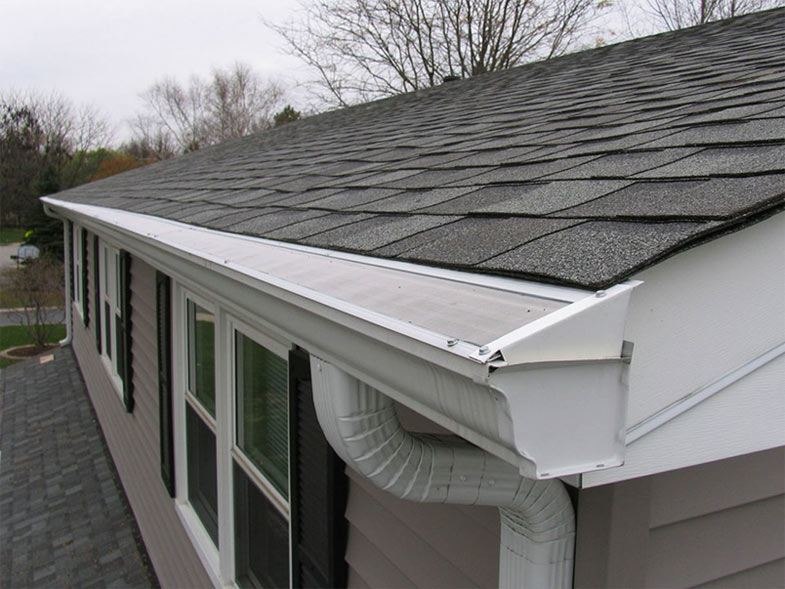
The quickest and most reliable way to keep birds out of your gutters is to close off access with a physical barrier. A quality gutter guard lets rainwater flow through freely while blocking birds and the leaves, twigs, and nesting debris they carry, leaving a nesting pair with no foothold and no dry material to build with.
Why Birds Choose Your Gutters
To a bird, a gutter is nearly perfect real estate. It sits high off the ground, tucked under the roof edge, where cats, raccoons, and most predators cannot reach. It collects dry leaves, twigs, and seed pods that make ready-made nesting material. And when leaves pile up, the trough holds a shallow pool of standing water - a convenient drink and bath for sparrows, starlings, and pigeons.
Once a pair settles in, they tend to return year after year. Birds are creatures of habit, and a gutter that sheltered them one season looks just as inviting the next. That is why a one-time scare tactic rarely solves the problem on its own; the fix has to make the gutter permanently unattractive.
The Damage Birds Do to Gutters
Birds are harder on a gutter system than most homeowners realize. Their weight, repeated landing, and constant scratching can loosen brackets and shift sections out of alignment. Nesting material jammed into downspouts blocks the flow of water, and accumulated droppings are acidic enough to stain and corrode metal and fascia over time.
The bigger problem is what happens after the nest goes in. A clogged gutter stops doing its job. Water backs up, spills over the front edge, and soaks the fascia, soffit, and foundation. Left unattended through a wet season, that trapped moisture can lead to wood rot, mildew, and cracks in the foundation - expensive repairs that a clean, protected gutter would have prevented.
How to Keep Birds Out
There are several ways to discourage birds, and they work best when combined.
Before you add any deterrent, start by clearing out whatever is already there. Remove old nests, matted leaves, and compacted twigs from the gutter and downspouts so a returning bird has no base to rebuild on. Trim back tree branches that hang close to the roofline, too - those overhanging limbs are the highway birds use to drop into the gutter in the first place.
- Decoy birds of prey. A realistic owl, hawk, or eagle decoy perched near the roofline can scare off smaller birds for a while. The catch is that birds catch on quickly - if the decoy never moves, they learn to ignore it. Move it to a new spot every few days to keep the illusion working.
- Natural repellent scents. Birds dislike strong, pungent smells. A light spray of garlic oil, or a mix of ground chili and water applied to nearby branches, can make the area less inviting. These are gentle and safe, but they wash away in rain and need regular reapplication.
- Remove easy food and water. Bird feeders, pet bowls, and low spots where water pools near the house all draw birds closer to the roofline. Moving these a little farther out makes the gutter area noticeably less appealing.
- A physical barrier. The most effective and lasting option is to install a gutter guard that lets only water through. A solid barrier removes the nesting site entirely, so birds move on rather than fight for it.
Scents and decoys are useful short-term tools, but they require ongoing attention and only work until a bird grows bold. A barrier, by contrast, solves the problem once and keeps solving it every season.
Why a Gutter Guard Is the Best Long-Term Fix
When it comes to keeping birds out, a gutter guard works where every other method falls short because it removes the attraction rather than just annoying the bird. GutterDome's patented dome-shaped gutter guard is designed for exactly this job. Water flows over the dome and through small openings into the gutter, while the curved surface sheds leaves, twigs, seed pods, and nesting material to the ground - leaving no dry spot for a bird to land on or build in.
Because the guard is built from military-grade 6063 extruded aluminum with a clear anodized finish, it will not rust, corrode, or rot like cheaper plastic and foam inserts. It holds its shape and its strength season after season, which is why GutterDome backs it with a 30-Year Lifetime Limited Warranty.

Keep birds and debris out for good - contact a GutterDome dealer for a free estimate.
Protect Your Gutters, Then Protect the Rest
A gutter guard also delivers the same protection that matters even when birds are not the problem. Blocked gutters overflow in heavy rain, and that overflow finds its way to the weakest points of your home - the foundation, the soffit, and the landscaping around the base of the house. Keeping water moving cleanly through your gutters is one of the simplest ways to prevent that kind of water damage. A protected, free-flowing gutter also means you will not have to climb a ladder to scoop out nests and leaves twice a year.
For more on how clogged gutters turn into structural problems, see how gutter guards keep debris out of the picture. And if you are dealing with heavy seasonal rain, it pays to review the National Weather Service's flood safety guidance so you understand what overflows and standing water can do to a home's exterior.
Ready to protect your home for good? Get your free, no-obligation GutterDome price quote today.