Gutter Cleaning in Philadelphia, PA: Why Guards Make It Obsolete
Gutter cleaning in Philadelphia, PA is a fact of homeownership life—and a task that arrives with the calendar’s certainty. The short answer to the question every homeowner asks—how often should I clean my gutters in Philadelphia?—is twice a year at minimum: once in late fall after the leaves are down, and again in early spring after the winter melt and the spring seed drop. Homes under a heavy tree canopy, or with flat and low-slope roofs that shed directly into the gutter, often need a third pass in mid-fall during peak leaf season.
What makes Philadelphia different from other markets is the combination of a dense deciduous canopy and a wet, freeze-thaw climate. Roughly 44 inches of rain a year and more than 120 precipitation days mean a gutter that is even partially clogged cannot do its job during the storms that matter most—the nor’easters and remnant tropical systems that have repeatedly flooded the Delaware and Schuylkill river corridors.
Why Gutter Cleaning Matters So Much Here
A clogged gutter is not just an eyesore—it is the first link in a chain of damage. When leaves, twigs, and maple “helicopters” pack a gutter, rainwater backs up and overflows the edge, running down the exterior wall and saturating the soil at the foundation. On Philadelphia’s older masonry rowhouses, that overflow finds its way into basements, rots fascia boards, streaks the brick, and accelerates the settling cracks that century-old homes are already prone to. In winter, a debris-filled gutter is the setup for ice dams: meltwater backs up, refreezes at the roof edge, and forces water under shingles and behind gutters—especially damaging on the slate and flat modified-bitumen roofs common to historic Philadelphia homes.
Standing water in a gutter carries its own problems. It corrodes the gutter from the inside, adds weight that pulls fasteners loose and lets the trough sag, and provides a breeding site for mosquitoes in a region where mosquito season runs long. Keeping gutters clear of standing water and the organic sludge that holds it is part of responsible drainage and pest management on any property—the kind of site drainage and grading discipline that landscape professionals recommend as a first line of defense against water problems. The American Society of Landscape Architects emphasizes proper drainage and grading as foundational to protecting a home’s foundation and plantings, and a free-flowing gutter is the top of that drainage chain.
The Philadelphia-Specific Hazards of the Job
Cleaning gutters anywhere means working from a ladder, but Philadelphia’s housing stock makes the job genuinely more demanding. The city is defined by its brick row homes—Society Hill, Queen Village, Fishtown, Bella Vista, the tight blocks of South Philly—many of them three stories tall with gutters that can only be reached from a narrow pavement, a rear alley, or a shared party wall. An extension ladder on uneven brick or bluestone, in the cold of late autumn, is a serious safety risk, and every year homeowners are hurt doing exactly this work. For those who hire it out, the climb adds cost; for those who do it themselves, it adds danger.
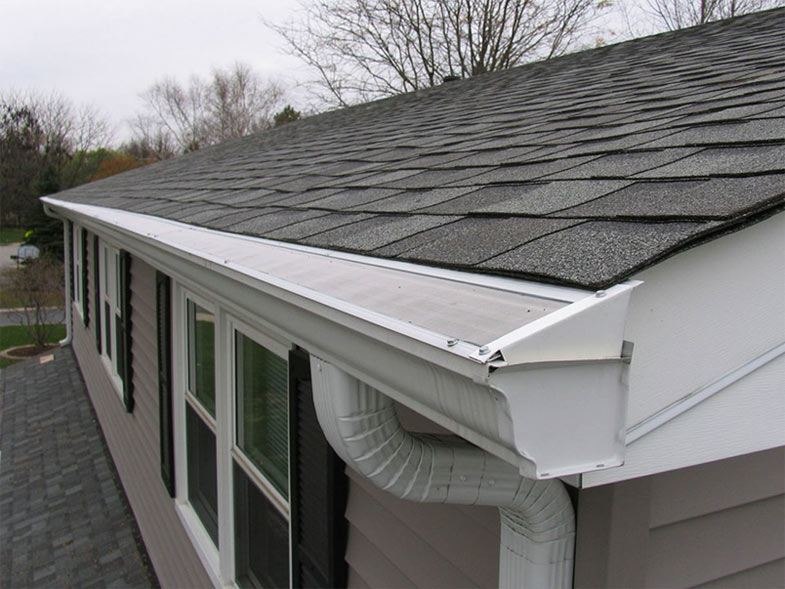
That reality is why so many Philadelphia homeowners end up asking a different question: can I stop cleaning my gutters so often? The answer is yes—the single most effective way to reduce gutter cleaning is to keep debris out of the gutter in the first place with a properly fitted gutter guard. A guard does not eliminate maintenance entirely, but it changes the job from scooping matted leaf packs every few weeks into an occasional rinse of the mesh surface. For a deeper look at the options, see our guides to leaf guards in Philadelphia, PA and gutter screens in Philadelphia, PA.
What a Proper Gutter Cleaning Actually Involves
Whether you do it yourself or hire it out, a complete gutter cleaning is more than scooping out leaves. It means clearing the gutter troughs, flushing the downspouts to confirm water flows freely to the discharge point, checking that the downspout extensions carry water well away from the foundation, and inspecting the gutter and fascia for damage while you are up there—loose fasteners, rust-through, sagging runs, and separated seams. It is also the natural moment to confirm the gutter is pitched correctly toward the downspout, since a gutter that has settled out of slope will pool water even when clean.
Timing matters. In Philadelphia, the ideal window for the main fall cleaning is after the majority of leaves have dropped—typically late November into early December—so the gutters are clear heading into winter’s freeze-thaw cycles. The spring pass should follow the maple helicopter and catkin season, once the last of the seed load has fallen. Homes under heavy oak or ginkgo canopies may need an extra mid-fall pass to stay ahead of the peak.
Downspouts and Drainage: The Other Half of the Job
A gutter cleaning is only half done if the downspouts are still clogged. A gutter can be spotless and still overflow if the water cannot leave through a blocked downspout—a common problem on older Philadelphia homes where downspouts narrow, elbow tightly, or discharge too close to the foundation. During a proper cleaning, every downspout is flushed to confirm water flows freely, and the discharge point is checked so that water is carried several feet away from the house rather than pooling at the base of the wall. Where a downspout empties onto a walkway or against a party wall, a splash block or extension is the simple fix that keeps the water moving.
Ready to find the right gutter guard for your Philadelphia home? Contact your local GutterDome Dealer today for a free, no-obligation estimate.
The same principle applies to the roof itself. Flat and low-slope roofs—the dominant assembly on Philadelphia row homes—shed water directly into the gutter and the internal drains, so a single clogged roof drain or scupper can back water up onto the roof membrane. If your rowhouse has a flat roof, the seasonal gutter cleaning is the right time to clear the scuppers and roof drains too, not just the gutters at the edge.
When to Call a Professional Instead
There are times when gutter cleaning should be left to a professional, and Philadelphia’s housing stock produces plenty of them. Three-story row homes with gutters reachable only from a narrow pavement or a rear alley, steep slate pitches, and any gutter that shows signs of rust-through, sagging, or separation are all better handled by a trained crew with the right equipment. A professional will also spot problems you would miss from the ground—loose fasteners, a settled gutter run that has lost its slope, or a downspout that is backing up underground. The cost of a cleaning is small compared to the damage a missed problem can cause, especially heading into a Philadelphia winter.
Frequently Asked Questions
Q: How much does gutter cleaning cost in Philadelphia?
A: Pricing varies with the height and length of the gutters, roof accessibility, and the condition of the system. A three-story rowhouse with hard-to-reach gutters typically costs more than a single-story suburban ranch. Your GutterDome Dealer can assess your specific home during a free estimate.
Q: Can clogged gutters damage my foundation?
A: Yes. Overflowing gutters concentrate water at the foundation, which saturates the soil, causes settling, and pushes water into older masonry basements—one of the most common and costly problems on Philadelphia’s rowhouses.
Q: Do gutter guards really reduce cleaning?
A: They reduce it dramatically. With debris kept out of the gutter, the heavy scooping work disappears and most homeowners only need an occasional rinse of the mesh surface.
Q: Is it safe to clean my own gutters?
A: On a single-story home with a stable ladder and a spotter, DIY cleaning can be done carefully. On Philadelphia’s three-story row homes with tight or uneven access, professional service is strongly recommended for safety.
Spend Less Time on a Ladder This Season
Gutter cleaning is non-negotiable in a city with this much rain and this many trees—but the amount of it is very much up to you. Keep the debris out, and the chore shrinks to almost nothing.
Get a Price today to see what GutterDome gutter protection would cost on your Philadelphia, PA home—and how much cleaning it can save you.