The Best Gutter Guards for Philadelphia, PA Homes
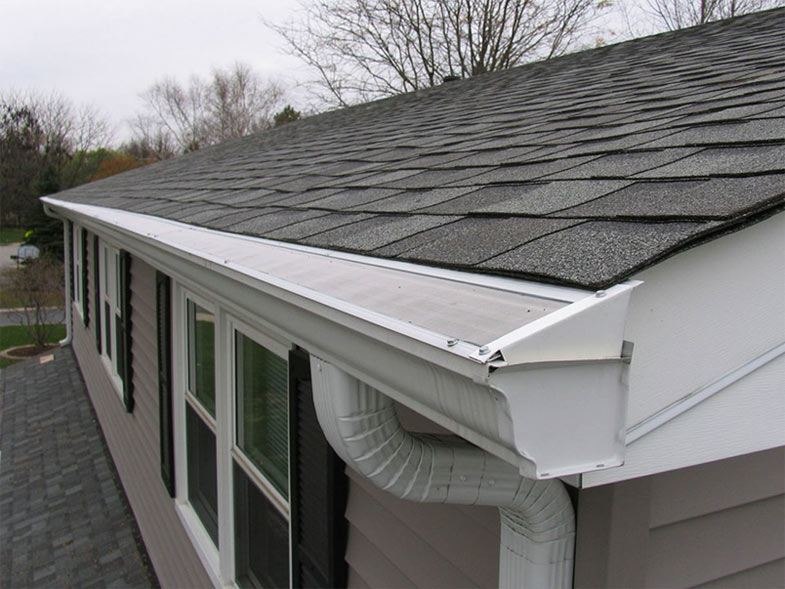
The best gutter guards for Philadelphia, PA homes are the ones engineered for what the Delaware Valley actually throws at a roofline: one of the heaviest deciduous leaf loads in the Northeast, storm downpours that ride in on nor’easters and the remnants of tropical systems, and freeze-thaw winters that stress every gutter joint. In practice, that means a fitted stainless steel micro-mesh screen over a rigid extruded aluminum frame — which is exactly what GutterDome builds. Flimsy snap-on covers and foam inserts fail within a season here; the guard that actually protects a Philadelphia home is the one that stops leaves, maple “helicopters,” and ginkgo fruit while still passing heavy rain at full flow.
The city’s housing stock sharpens that standard further. Philadelphia is the city of row houses — brick rowhomes, slate-roofed Victorians, flat-roofed builds, and irregular mansards — and many of the oldest homes carry built-in box gutters and rooflines that demand a fitted, precisely installed guard rather than a one-size-fits-all panel from a shelf.
What Makes the Best Gutter Guard for a Philadelphia Home
A guard earns the title “best” in this market only if it does four things well:
- Blocks the small stuff. Philadelphia’s maples, oaks, sycamores, and sweetgums drop leaves, but it is the winged maple samaras, ginkgo fruit, and fine spring catkins that slip through slotted covers and wedge into downspouts.
- Passes storm rain at full flow. Nor’easters and the remnants of tropical systems like Hurricane Ida (2021) deliver inches of rain in hours. A guard that cannot drain that fast moves the problem from the gutter to the fascia and foundation.
- Survives freeze-thaw. Roughly 22 inches of snow each winter, plus routine freeze-thaw cycles, expand and contract a gutter all season. Cheap stamped steel rusts and warps; surgical-grade stainless does not.
- Stays put on older roofs. Historic slate and irregular rooflines need a guard that can be fitted flush and fastened securely, not one that lifts in the first storm.
Philadelphia’s Climate and Debris Load
Philadelphia receives roughly 44 inches of precipitation a year across about 120 precipitation days, plus about 22 inches of snow each winter. The totals only tell part of the story. The real strain comes from the pattern: a dense street-tree canopy that drops a heavy leaf load every October and November, a spring burst of maple samaras and ginkgo fruit, and repeated freeze-thaw cycles that put stress on gutters all winter long.
Philadelphia sits about 60 miles inland, so it faces little direct ocean storm surge. The genuine water risk is inland: nor’easters and the remnants of tropical systems that push the Delaware and Schuylkill rivers high and dump several inches of rain in a single afternoon. Hurricane Ida in 2021, Tropical Storm Lee in 2011, and Isaias in 2020 all produced major inland flooding across the metro. A gutter guard that sheds that water fast is the difference between a clear eave and a flooded basement.
Comparing the Main Gutter Guard Types
- Solid reverse-curve hoods. Wrap water over a curved nose. They handle big leaves but let samaras, pollen, and seed pods straight through, and can overshoot in a hard downpour.
- Snap-on covers and screens. Inexpensive and easy, but leak at corners, clog as they fill, and rust through within a few seasons of Philadelphia freeze-thaw.
- Foam and brush inserts. Sit inside the gutter and fill with silt, holding moisture against the gutter and stopping drainage entirely.
- Stainless micro mesh on an aluminum frame. Blocks the finest debris on top while passing high water volume below — the category that wins for Philadelphia’s leaf load, storm rain, and ice.
The GutterDome Lineup for Philadelphia Homes
GutterDome manufactures six systems to cover every Philadelphia roofline, gutter size, and tree condition, all built from extruded aluminum with surgical-grade stainless steel mesh:
- GutterDome (GD45) — a #40 mesh stainless steel screen (1,600 holes per square inch, 400 microns) in surgical-grade T304 stainless steel, for standard 4-inch to 5-inch gutters.
- GutterDome (GD67) — the same #40 mesh screen (1,600 holes per square inch, 400 microns), sized for larger 6-inch to 7-inch gutters.
- GutterDome Magma (GD45M) — a #20 mesh open-flow screen (400 holes per square inch, 842 microns) for high-water-flow areas, inside miters, and ice-prone spots.
- GutterDome Magma (GD67M) — the #20 mesh open-flow screen (400 holes per square inch, 842 microns) for larger 6-inch to 7-inch gutters.
- GutterDome Adjustable (GD45A) — a #40 mesh guard with a back wing for steep rowhouse pitches above 6/12, where a standard guard cannot tuck under the roofing.
- GutterDome uPVC (GD45P) — a white uPVC dome with a T304 stainless-steel plain-weave #30 mesh (900 holes per square inch, 595 microns), sealed with a 20-year silicone sealant.
Ready to find the right gutter guard for your Philadelphia home? Contact your local GutterDome Dealer today for a free, no-obligation estimate.
How to Choose: Roof, Trees, and Gutter Size
Three questions point you to the right guard. First, what is over your roof? Dense maples and oaks call for the finest mesh (GD45 or GD67); an open, cleaner roofline can step down to a more open weave like the Magma line. Second, what is the pitch? Steep Philadelphia rowhouses and mansards above 6/12 often need the Adjustable (GD45A). Third, what size are your gutters? Standard 4-to-5-inch runs take the GD45 or uPVC (GD45P); wider 6-to-7-inch runs take the GD67. A local GutterDome Dealer answers all three on a single walkthrough.
A Note on Historic Row Homes and Box Gutters
Philadelphia’s oldest housing stock carries a distinctive feature worth knowing about: the built-in copper-lined box gutter, sometimes called a “Philadelphia gutter,” that runs along the roofline of many historic row homes. These are not standard open gutters, and a GutterDome guard is designed to fit standard 4-to-7-inch gutters rather than built-in box gutters — worth confirming during an estimate. For the many historic homes with conventional gutters, though, a guard that attaches to the gutter rather than altering the roof is the right choice, because Philadelphia Historical Commission districts require in-kind materials and review for visible roof changes. Read more in our guide to gutter guard installation in Philadelphia, PA.
What the Best Gutter Guards Cost
Gutter guard pricing depends on your home’s linear feet of gutter, roofline complexity, and the model you choose, so the honest answer to “what does it cost?” is “it depends on your roof.” What is consistent is the value on the other side of the price. The Insurance Information Institute’s guide to protecting your home from water damage notes that water is among the most common and costly sources of home damage — and a clogged or overflowing gutter is exactly the kind of slow failure that invites it. A quality guard installed once, backed by a transferable 30-Year Lifetime Warranty, trades recurring cleaning and repair costs for a one-time investment.
Communities We Serve Across the Philadelphia Region
GutterDome’s local Dealers install the best gutter guards for homeowners throughout the Philadelphia-Camden-Wilmington metro, including Philadelphia (Center City), Ardmore, Bala Cynwyd, Bryn Mawr, Camden, Cherry Hill, Chester, Conshohocken, Doylestown, Haddonfield, Jenkintown, King of Prussia, Media, Norristown, Upper Darby, West Chester, Wilmington, and Newark — across Bucks, Montgomery, Chester, Delaware, and Philadelphia counties in Pennsylvania; Burlington, Camden, Gloucester, and Salem counties in New Jersey; New Castle County in Delaware; and Cecil County in Maryland. Explore our Philadelphia, PA gutter guard hub for the full picture.
Frequently Asked Questions
Q: What is the best type of gutter guard for Philadelphia?
A: Fitted stainless steel micro mesh on a rigid aluminum frame. It blocks the region’s leaves, samaras, and ginkgo fruit while passing storm rain at full flow — something hooded guards and snap-on covers cannot do.
Q: Will a gutter guard handle a nor’easter downpour?
A: Yes, when it is built for it. A stainless micro-mesh guard sheds inches of rain in a single storm, keeping water moving to the downspouts instead of overflowing at the fascia.
Q: Which guard is best for a rowhouse with a steep roof?
A: The GutterDome Adjustable (GD45A). Its back wing lets it fit steep pitches above 6/12 where a standard guard cannot tuck under the roofing material.
Q: Do gutter guards work on slate roofs?
A: Yes. GutterDome guards install on nearly any roofing material, including the slate roofs common on Philadelphia’s older homes, and they attach to the gutter rather than disturbing the slate.
Q: Do the best gutter guards need any maintenance?
A: Minimal. Debris sheds from the top of the mesh, so a light rinse after the fall leaf drop or spring pollen season is usually all that is ever needed.
Q: How do I know which GutterDome system fits my home?
A: The local GutterDome Dealer will inspect your roof pitch, gutter size, and tree cover and recommend the specific system for your conditions — at no charge.
Get the gutter guard that is actually built for Philadelphia. Request a free estimate from a local GutterDome Dealer today.