Gutter Cleaning in Chicago, IL: Why Guards Make It Obsolete
Gutter cleaning in Chicago, IL is a twice-yearly chore that most homeowners dread — and one that modern gutter guards largely make obsolete. Between the heavy leaf drop of native oaks, sugar maples, and American elms each autumn, the maple “helicopter” seeds that arrive in spring, and the freeze-thaw cycles that pack debris into ice each winter, gutters across the metro clog fast and clog often. A properly installed micro-mesh gutter guard stops the debris at the source, so water keeps flowing without you ever climbing a ladder.
This guide explains why Chicago gutters clog so quickly, what clogged gutters actually cost you, and how Chicago, IL gutter guards end the cleaning cycle for good.
Why Chicago Gutters Clog So Fast
Chicago’s tree canopy is the culprit. Bur oak, white oak, red oak, sugar maple, green ash, white ash, and American elm dominate the region’s older neighborhoods, and together they drop a dense layer of leaves every fall. Sugar maples add a second wave in spring, releasing the winged “helicopter” seeds that spin down onto roofs and straight into open gutters. Elms and ash add fine twigs and samaras that wedge into downspout elbows. The result is the single biggest gutter-clogging driver across the metro: seasonal leaf-and-seed buildup that refills a clean gutter within weeks.
Winter makes it worse. When snowmelt and rain hit a gutter packed with frozen debris, the water backs up, refreezes at the roof edge, and forms ice dams that can tear gutters loose and force water under the shingles. Then the summer thunderstorm season arrives with sudden, intense downpours that overwhelm any gutter still carrying last season’s debris.
The Real Cost of Gutter Cleaning
Professional gutter cleaning in the Chicago area typically runs by the visit, and a two-story bungalow or Victorian with a steep roofline needs attention at least twice a year — more if you live under heavy tree cover in Naperville, Oak Park, or Evanston. Those visits add up fast, and they only buy you a few weeks of clean flow before the next storm refills the troughs.
The hidden costs are bigger. Every trip up a ladder to scoop debris is a fall risk, and every season of deferred cleaning shortens the life of your gutters and fascia. The honest math is that a one-time gutter guard installation often pays for itself within a few years of skipped cleanings — before you even count the water-damage repairs it prevents.
What Happens When Gutters Stay Clogged
Clogged gutters do not just look bad. Standing water in a blocked trough breeds mosquitoes and saturates the fascia and soffit, leading to rot. When a downpour hits, water that cannot reach the downspouts pours over the sides, soaking foundation walls, eroding soil, and seeping into basements — a common and costly problem in a region with clay-heavy soils. The National Weather Service’s flood safety guidance notes that even brief, intense storms can overwhelm drainage quickly, which is exactly when a blocked gutter system fails.
Ice dams are the winter version of the same problem. A gutter packed with frozen leaves cannot drain snowmelt, so the water refreezes at the eave, lifts the shingles, and lets melt water run into the roof deck and walls. That is the kind of damage a guard prevents for the life of the roof.
How Gutter Guards End the Cycle
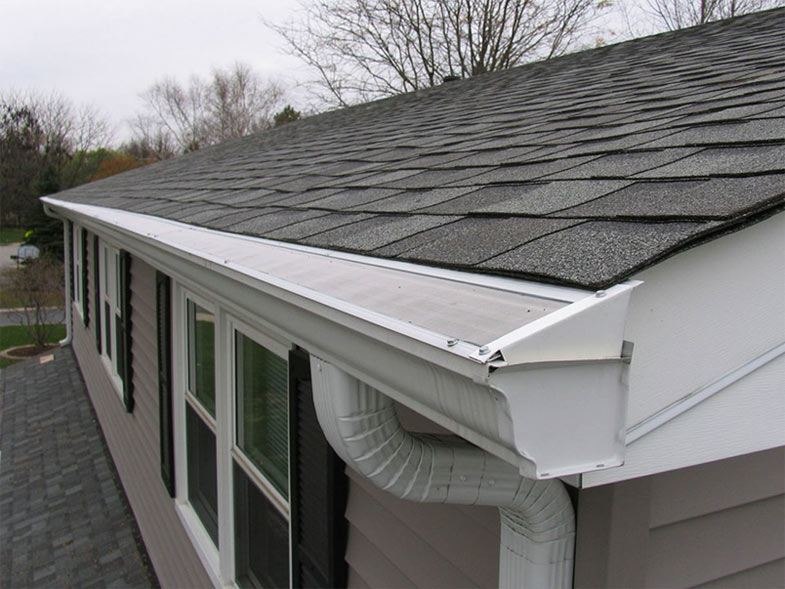
Gutter guards make cleaning obsolete by keeping debris out in the first place. GutterDome’s guards use stainless steel micro-mesh screens fine enough to stop leaves, maple seeds, and oak catkins, while still passing water at full flow. Because the debris never enters the gutter, there is nothing to scoop, nothing to freeze into an ice dam, and nothing to wash down and clog the downspouts.
Across the lineup, GutterDome (GD45) and GutterDome (GD67) use a #40 mesh stainless steel screen (1600 holes per square inch, 400 microns) for heavy leaf neighborhoods; GutterDome Magma (GD45M and GD67M) use a #20 mesh built for high-water-flow and snow regions; GutterDome Adjustable (GD45A) fits steep roofs with its #40 mesh and narrower back wing; and GutterDome uPVC (GD45P) pairs a #30 mesh screen (900 holes per square inch, 595 microns) with a corrosion-proof uPVC body. Every guard is backed by a 30-Year Lifetime Limited Warranty.
Ready to find the right gutter guard for your Chicago home? Contact your local GutterDome Dealer today for a free, no-obligation estimate.
Cleaning vs. Guards: What to Expect
If you keep cleaning, plan on at least two visits a year — and more after every windstorm that strips a neighbor’s maple onto your roof. With a quality guard installed, the gutter itself stays clear, and the only maintenance is an occasional visual check from the ground after a heavy storm to confirm nothing unusual has collected on top of the mesh. For most Chicago homeowners, that is the difference between a recurring bill and a one-time fix.
That said, no guard is a license to ignore your roof entirely. Large branches and unusual storm debris should still be cleared from the roof surface, and downspouts should be checked after a major hail or wind event. But the seasonal scoop-and-flush routine — the dangerous, repetitive part — is gone.
When Guards Still Need a Quick Check
Even with guards, there are a few moments worth a glance. After an intense thunderstorm or hailstorm, walk the perimeter and confirm the mesh is seated and the downspouts are running clear. In late winter, keep an eye on the roof edge for ice accumulation above doorways and walkways. And after the spring seed drop, confirm no mat of maple seeds has piled on top of the screen. These are five-minute ground-level checks, not ladder work — a fraction of the effort of a full cleaning.
Communities We Serve Across Greater Chicago
GutterDome’s local Dealers install gutter guards for homeowners across the metro, including Chicago, Naperville, Aurora, Elgin, Joliet, Evanston, Arlington Heights, Schaumburg, Waukegan, Oak Park, Skokie, Wheaton, and Orland Park, the Northwest Indiana communities of Gary, Hammond, East Chicago, Merrillville, and Valparaiso, and Kenosha, WI — across Cook, DeKalb, DuPage, Grundy, Kane, Kendall, Lake, McHenry, and Will counties in Illinois, Jasper, Lake, Newton, and Porter counties in Indiana, and Kenosha County in Wisconsin. See also our guides to the best gutter guards for Chicago and gutter guard installation in Chicago.
Frequently Asked Questions
How often do Chicago gutters need cleaning without guards?
Most Chicago homes need cleaning at least twice a year — once after fall leaf drop and once after spring seed drop — and more often under heavy tree cover or after windstorms.
Do gutter guards really eliminate cleaning?
Quality micro-mesh guards keep leaves, seeds, and needles out of the gutter entirely, eliminating the seasonal scoop-and-flush routine. An occasional ground-level visual check is all that remains.
Are gutter guards safe in snow and ice?
Yes. The GutterDome Magma line is engineered for cold-weather and snow regions, and the guards are built to shed snowmelt rather than let it back up into ice dams.
Will maple helicopter seeds clog my downspouts?
Without guards, yes — maple seeds wedge into downspout elbows and are a leading cause of spring clogs. A #40 micro-mesh screen stops them before they enter the gutter.
Is it worth paying for guards instead of cleaning?
For most homeowners, yes. A one-time installation typically pays for itself within a few years of skipped cleanings, before accounting for the water-damage repairs it prevents.
Can guards help with mosquitoes and standing water?
Yes. By keeping gutters free of the debris that traps water, guards eliminate the standing-water pools where mosquitoes breed.
How much does gutter guard installation cost in Chicago?
Cost depends on your roofline length, pitch, and the model you choose. Every GutterDome quote is free and based on an in-home assessment, so you get an exact number before you commit.
Stop the seasonal ladder routine for good. Get a free gutter guard quote for your Chicago, IL home from your local GutterDome Dealer today.