Do Gutter Guards Work in Heavy Rain? What Actually Happens in a Downpour
October 14, 2026
Yes, a gutter guard works in heavy rain — but not by itself, and not every guard. A guard keeps debris out of the trough so the water has somewhere to go. It cannot widen a gutter that was too small for the roof above it or add a downspout that was never installed. In a downpour those two things, not the mesh, usually decide whether water clears the edge or runs over it. This covers which guard types keep up, what actually causes an overflow that looks like a guard failure, and how to tell whether your whole system is sized for your roof. Start with micro-mesh gutter guards, because the mesh is the part that has to pass the storm.
The Guard Is Rarely What Overflows
When a gutter overflows in heavy rain, the first assumption is that the guard failed. Most of the time it did not. A guard sits at the top of a system, and it can only pass water as fast as the gutter beneath it can carry water away. If the trough was packed with debris before the guard was fitted, if the downspouts are too few or too narrow, or if the fall toward the outlet is wrong, the gutter fills and the excess goes over the front lip regardless of what covers it.
The testing team at This Old House ran a 2026 round of heavy-rain guard testing and put the limit plainly: no gutter guard can prevent overflow if your gutters get clogged, if your drainage systems are undersized, or if poor installation restricts water movement. Each guard in that round faced a ten-gallon flow test, three pounds of leaves, twigs, acorns, pine needles, and shingle grit flushed through, and a six-hour stress run. The ones that held up passed debris quickly and kept flowing.
Heavy Rain Changes the Math, Not the Guard
Average rain is not what a gutter system is tested by. A roof is an impervious surface, and an impervious surface concentrates everything that lands on it into a short run of gutter. The U.S. Environmental Protection Agency treats runoff from impervious surfaces as a recognized stormwater quantity and quality problem for exactly this reason. A system that drains a gentle rain can be overwhelmed by a storm that drops the same total in a fraction of the time.
That is why two homes with identical gutters behave differently in one storm. What differs is rainfall intensity, roof area, and pitch. A steep roof sheds water faster than a shallow one, and a large roof delivers more water to the same run of gutter. Heavy rain does not make a guard fail. It exposes a system whose numbers were never right for the site.
Which Guard Types Keep Up in Heavy Rain
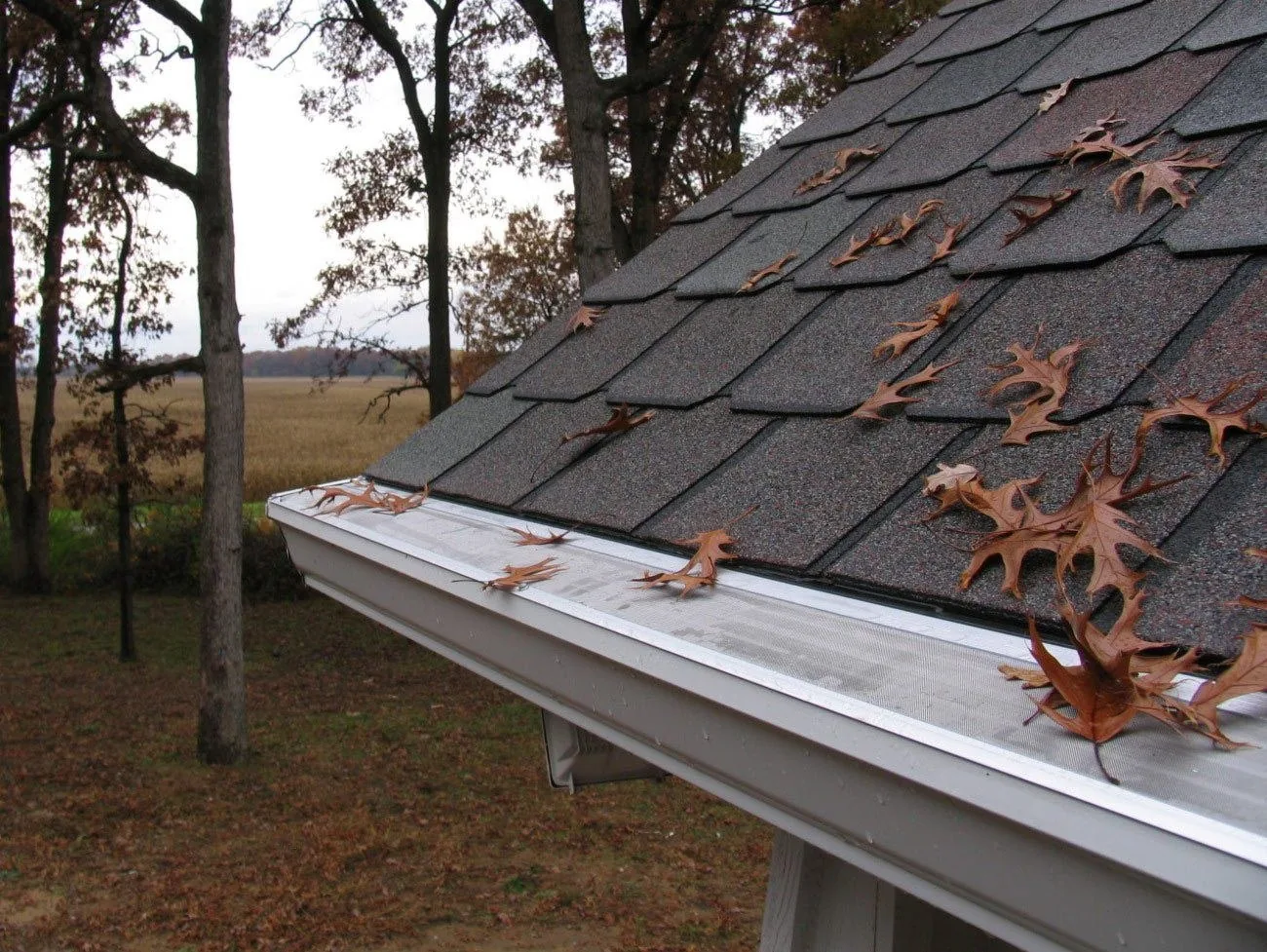
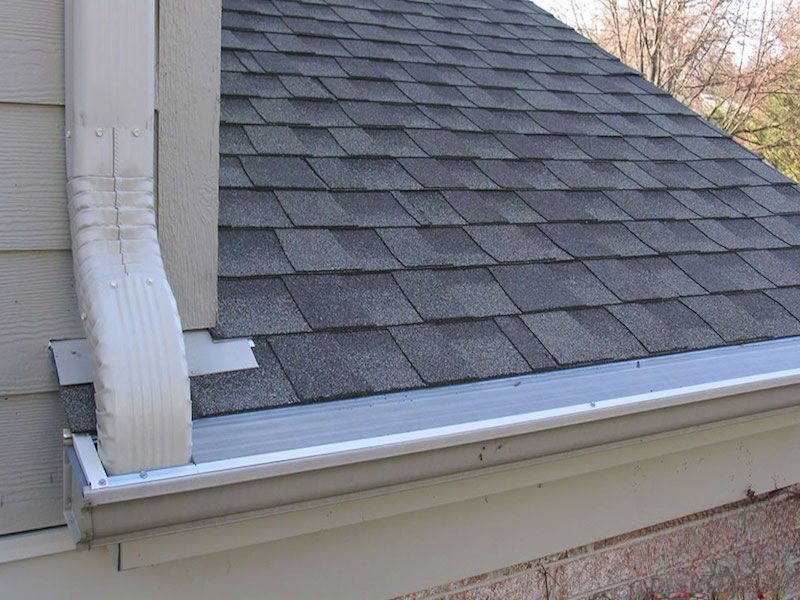
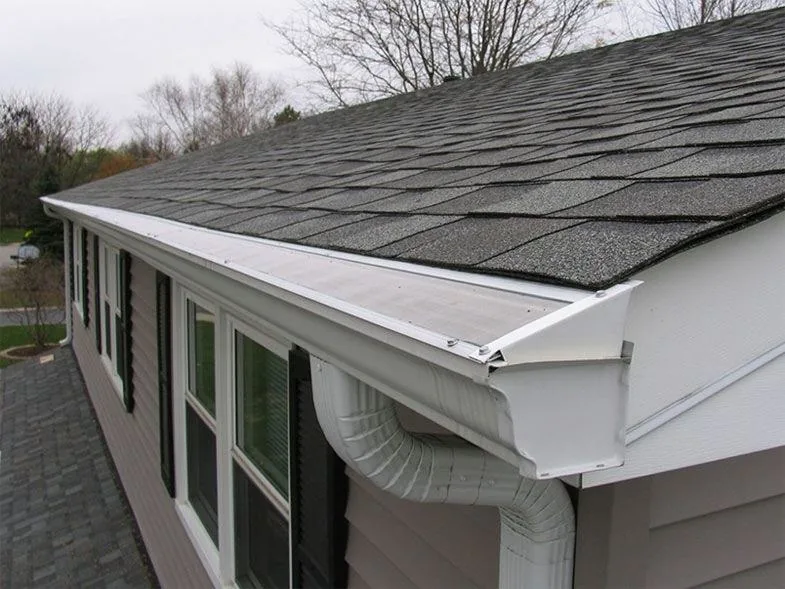
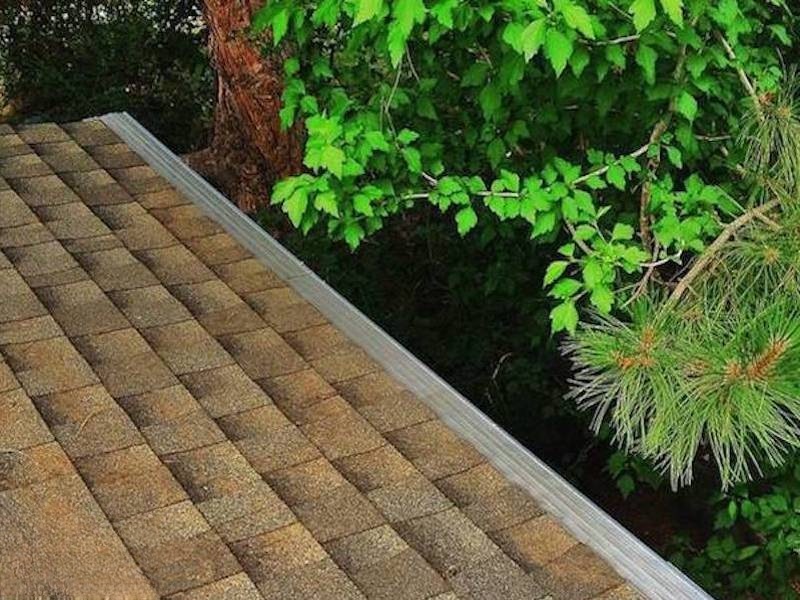
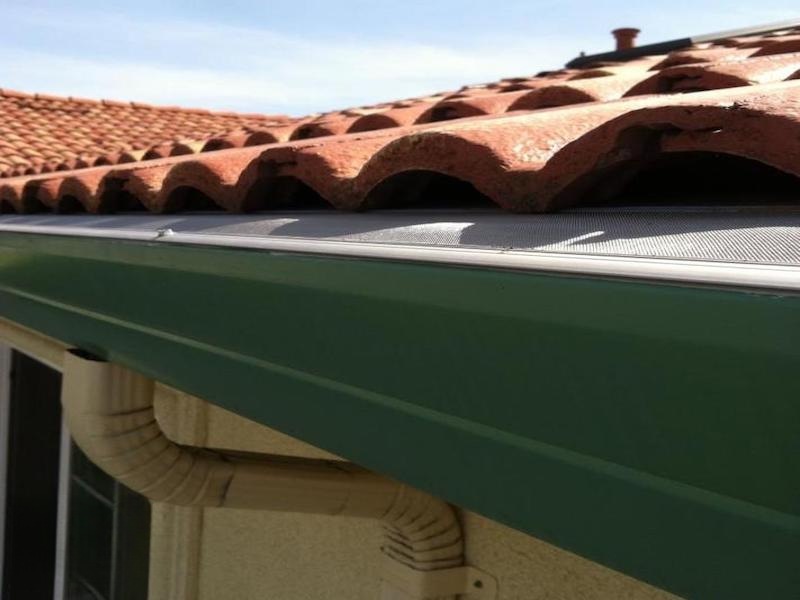
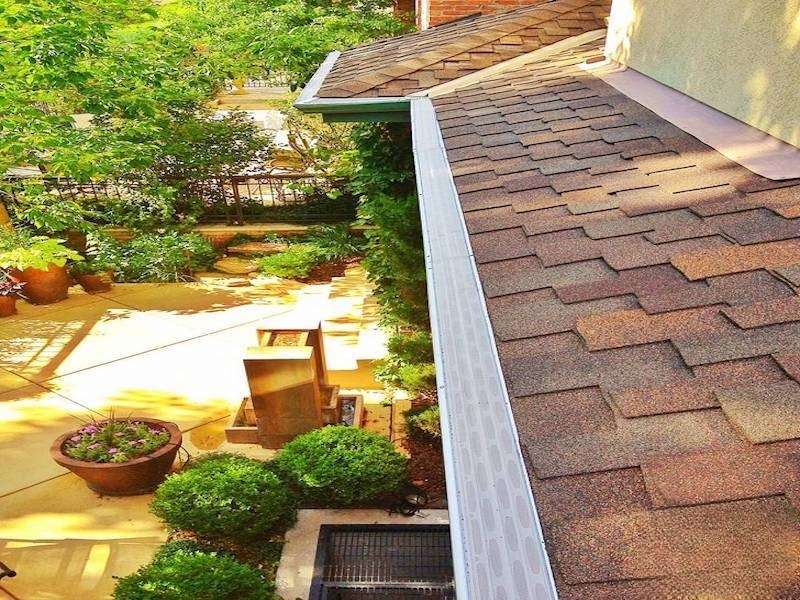
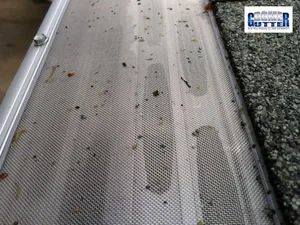
Type matters more in heavy rain than in light rain, because flow is what is being tested. Fine stainless micro-mesh delivers the best combination of debris capture and flow, which is why it is the type specified for storm-heavy regions and for homes under trees that drop fine material all year.
Reverse-curve guards, also called surface-tension or hood-style guards, are the ones to treat with caution. They move water over a curved lip and into the gutter, and when they are not installed exactly right, or when the flow is heavy enough, they shed water over the front edge instead of into the trough. Reviews of the category consistently find they overflow more easily than mesh and are not the type to choose where rainfall is heavy.
The insert types fail differently. Foam and brush inserts sit inside the channel and leave the top open, so debris collects on them and works into the trough. Where volume is the concern, foam and brush are the two to avoid, because they trade flow for a filter that clogs. GutterDome’s flagship guard is built the other way, with a 40-mesh surgical-grade plain-weave stainless-steel wire mesh in an extruded 6063 aluminum frame, and the GD45P at 30 mesh. Our gutter guards overview lays out what each type is suited to.
Why Capacity Is a System Number, Not a Product Claim
Guard makers can only promise the flow their mesh passes. Whether the gutter can carry that water away is a separate calculation, and it is the one that decides heavy-rain performance. The figures contractors work from are approximate but useful. A five-inch K-style gutter can handle a roof of roughly 2,200 square feet in moderate rainfall, and a six-inch holds about forty percent more. Downspouts follow their own rule of thumb: one per six hundred square feet of roof, minimum two, about fifty percent more in heavy-rainfall areas, and spacing no wider than thirty-five to forty feet.
None of those numbers replaces a measurement. They tell you what to ask about, and the relationship is the point: capacity scales with roof area and rainfall intensity, so the same guard can be a solution on one home and a bottleneck on another. Landscape architects treat roof runoff and site drainage as one designed system, and the American Society of Landscape Architects maintains guidance on how water should move through a site. A guard that fixes the clog but leaves water pooling at the foundation has only moved the problem.
If you are not sure what your gutters and downspouts were sized for, that is the question to put to someone who measures it for a living. Contact a local GutterDome Dealer with your roof’s square footage and a photo of the roofline, and they can tell you whether the system behind the guard can carry the storm you actually get.
What Overflow Actually Costs
Water that goes over the front of a gutter does not disappear. It lands at the base of the wall, and repeated saturation at the foundation is where the expensive damage begins. Grade water can wick into the wall, soften the soil that supports the footing, and find hairline cracks that freeze and widen over a winter. The full chain, and why perimeter drainage matters as much as the gutter itself, is laid out in our piece on gutter guards and foundation water damage.
That cost is the argument for getting the system right the first time. A guard keeps the trough clear, but only a gutter and downspout set sized for the roof protects the house.
What to Check Before You Buy
Four questions separate a guard that handles a storm from one that does not.
How fine is the mesh, and how open is it behind the surface? Fine filtration and high flow are not opposites; the mesh grade and the open area behind it decide whether both are satisfied.
What type is it? For heavy-rain regions, micro-mesh is the answer. Reverse-curve and the insert types are the ones to avoid.
How was the system sized? Ask whether anyone measured the roof area, the gutter width, and the downspout count against your local rainfall before quoting.
Who installs it? Fit is not a detail. A guard that is not seated correctly lets water run behind it, which is nearly the same as having no guard at all. Professional gutter guard installation measures the gutter and the roof before anything is ordered instead of cutting to fit on the day.
FAQ
Q: Do gutter guards work in heavy rain?
A: Yes, for the debris half of the problem. A fine micro-mesh guard keeps leaves, needles, and grit out of the trough so water can drain instead of backing up. It does not add capacity, so a guard cannot rescue a gutter or downspout system that was undersized for the roof in the first place.
Q: Why do my gutters still overflow in a downpour even with guards?
A: Usually because the guard is not the limiting factor. Overflow with guards in place most often traces to debris packed in before the guard was fitted, downspouts that are too few or too narrow, or a gutter that has lost its fall toward the outlet. Each of those restricts water movement after it passes the guard, which is outside the guard’s job.
Q: Which gutter guard type handles heavy rain best?
A: Fine stainless micro-mesh, by the testing record. It passes the most water while still capturing fine debris. Reverse-curve or surface-tension guards overflow more easily when flow is heavy, and foam and brush inserts clog and cut flow, so neither is the right choice where rainfall is intense.
Q: Do gutter guards slow the water going into my gutters?
A: A guard that is properly specified slows the flow only slightly, because the mesh is sized to pass storm volume rather than to meter it. A poor one — a coarse screen, a dense insert, or a reverse-curve hood that is not seated right — can slow or divert the water enough to send it over the edge.
Q: Will guards help if my gutters or downspouts are undersized?
A: They help with the clog, not with the capacity. Guards keep the trough clear, but if the gutter cannot carry the water your roof delivers it will still overflow, and downspouts that are too few will still back the system up. When that is the case, the right order of work is sizing first and guarding second.
Q: Should I add more downspouts before buying guards?
A: Only if a measurement says you need them. The common rule of thumb is one downspout per six hundred square feet of roof, with a minimum of two and about fifty percent more in heavy-rainfall areas. If your home already meets that, guards are the better spend; if it does not, adding a downspout addresses the overflow a guard cannot.
If your gutters are backing up in the worst storms of the year, the fix may be a guard, a bigger system, or both, and it is worth finding out which before you spend. Request a free estimate from a local GutterDome Dealer and get a straight answer on what your roof actually needs.